
Hospital Generators Can Be Adversely Affected by Microbes Known as ‘Diesel Bug’
Sep 11, 2020
David Armitage, Business Development Director for Conidia Bioscience points out an underexposed phenomena in hospital generators that poses s dangerous risk of power outages and to peoples lives

Egham, United Kingdom - September 11, 2020 /PressCable/ —
It’s imperative to have a secure power supply within a hospital environment and can be a matter of life or death. If there is an outage, even for just a few minutes, it can have adverse affects on patients especially on life support who require their equipment to be fully operational. It is for this reason that almost all hospitals worldwide have some form of emergency backup generator which is more often than not powered by diesel.
Just one single tank of diesel has the capability of maintaining power to the hospital for approximately eight hours however there are some concerns that have been flagged about the reliability of backup generators after it’s been reported diesel generators can be susceptible to fuel blockages. These fuel blockages are caused by a phenomenon known as microbial contamination (diesel bug) which blocks fuel lines with microbes (such as fungi and bacteria) that can grow in tiny microscopic water that is entrapped within diesel fuel. Over time as generators aren’t fired up frequently enough, the microbes are allowed time to grow with potentially devastating effects.
So if there is a real risk of microbial pollution in the supply of biodiesel to emergency generators, what precautions are taken? Unfortunately the risks associated with the ‘diesel bug’ only work their way into service guidance from manufacturers of generator equipment. In industries such as aviation and marine, the risk posed to equipment is well recognised, but awareness is not as high among hospital operators, who rely instead on the expertise of fuel maintenance contractors who charge hospitals for fuel polishing.
Therefore, it is wise for certain contractors to carry out testing and to provide operators with reports as fuel quality verification. In 2016, the British Standards Institute replaced BS5410-3:1976 with an updated release to address concerns over critical standby generators failure. Guidelines in the new standard consider how the life cycle of fuels has declined since the introduction of biofuel and state that: ‘Fuels for emergency generators should be tested for consistency and suitability every six months if they are fitted with a fuel polishing system, if there is no polishing system, the fuel should be tested every three months. Read more from the original Hospital Times article here: https://www.hospitaltimes.co.uk/the-diesel-bug-that-can-give-hospitals-a-generator-emergency/
If samples are being taken offsite for testing, this ideally needs to happen within hours as when samples are preserved in transit, the microbial community may change and therefore the test results may not be representative of the microbial growth in the tank/generator. The Standard Guide for Microbial Contamination in Fuels and Fuel Systems, ASTM D6469 – 14, states in Section 8.5 that: “Samples for Microbiological testing should be kept on ice for transport to the laboratory. Tests should be performed within 4 h and no later than 24 h after sampling. Samples stored at higher temperatures, or for longer times, can show the presence of microbial contamination that does not represent actual fuel system conditions.” Overall, it would make much more sense to carry out testing onsite to avoid these issues altogether. This can be achieved using an immunoassay antibody test kit such as FUELSTAT® from Conidia Bioscience.
Find out more about Conidia and Fuelstat here: https://conidia.com/
Contact Info:
Name: David Mitchell
Email: Send Email
Organization: Conidia Bioscience Ltd
Address: Conidia Bioscience Ltd, Bakeham Lane, Egham, Surrey TW20 9TY, United Kingdom
Phone: +44-1491-829102
Website: https://conidia.com/
Source: PressCable
Release ID: 88976162
Recommended


Joey starts a movement
/file/publisher-c1a3f893382d2b2f8a9aa22a654d9c97/2024/11/a8128fae7be3df6d0458c549bf486f74.jpg)

/file/attachments/orphans/test1_716667.png)
China’s finance minister on fiscal policy




YOUR NEWS, OUR NETWORK.
Do you have Great News you want to tell the world?
Be it updates about your business or your community, you can make sure that it’s heard by submitting your story to our network reaching hundreds of news sites across 6 verticals.
More News

Firefighters tackle bushfires near Toowoomba
Two major blazes continue to burn out of control in Queensland's Lockyer Valley.

Woman 'feared for her life' over Uber scam
A woman says she has been scammed by an Uber driver who left her scared for her safety in Melbourne.

Delays ease after traffic temporarily held on A2 following crash
Motorists were advised to approach with caution following a crash during rush hour.

Tailbacks clear after crash involving car and van on M2
A crash on the M2 caused long delays for drivers heading coast-bound.

Plans for 44 homes on agricultural land next to tiny village
Plans have come forward for dozens of homes on “unproductive” agricultural land in a small village.

US defence experts to work inside Taiwan military HQ under reported pact
A reported plan to station US defence personnel inside Taiwan’s military headquarters would take cooperation from external help into the heart of defence planning, potentially angering Beijing while raising questions over Taipei’s policymaking autonomy and military secrecy. According to Taiwanese media reports at the weekend, the Pentagon plans to send one official from the Office of the Under Secretary of Defence for Policy and one expert from the Institute for Defence Analyses (IDA) to work on...

Nepali Army restores roads, water supply in flood-hit districts
Key Takeaways: Nepali Army continues rescue and relief operations in affected districts Landslide-blocked road reopened along the Anand Bagar–Lamgara route Drinking water pipel...
/file/attachments/orphans/fam1_467698.png)
Too busy with border agency duties, Shuhaily turns down FAM integrity post
Footballing body respects decision, appreciates his past commitment to strengthening association's integrity, governance.
/file/publisher-c1a3f893382d2b2f8a9aa22a654d9c97/2026/08/b3951ab4e75ddfd2bfee10fe3cd475b6.jpg)
Schoolgirl's death caused by blunt trauma to the head, cops confirm
Irene's father vows to seek justice, appeals for public support.
/file/attachments/orphans/bersamapc1sded_752604.png)
Reject 'dinosaur politics': Ex-PJ MP joins Bersama, targets Chinese voters
Lee also describes the current political atmosphere as 'dishonest'.
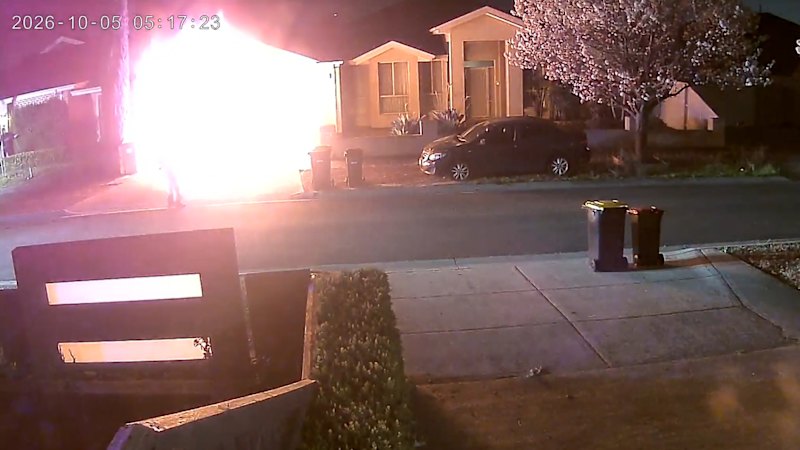
Teen fighting for life after botched firebombing in Melbourne
A teenager is fighting for life after setting himself and then a getaway car on fire.

Why protecting home values is Beijing’s new priority
For decades, China’s property sector was defined by spectacular scale: farmland transformed into suburbs, skylines rising across regional hubs and, more recently, the prominent unravelling of heavily indebted developers. Yet beneath those dramatic changes, a far quieter and more consequential transformation is taking shape. Official figures published by the National Bureau of Statistics in September reveal that secondary market home transactions have surpassed new residential builds in volume....